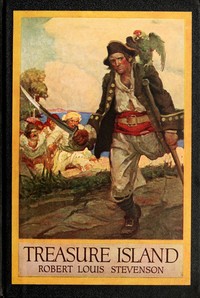
Robert Louis Stevenson began Treasure Island on a rainy day in 1881, drawing a map of a fictional island to entertain his stepson Lloyd Osbourne. The map determined the story, not the other way around — Stevenson wrote to fit the geography. The novel that resulted invented or consolidated virtually every convention of the pirate adventure genre: the treasure map, the desert island, the parrot, the one-legged villain.
What it also did, less obviously, was create one of the most morally ambiguous characters in adventure fiction.
Open Treasure Island in warpread →
What Treasure Island Is About
Jim Hawkins lives with his parents at the Admiral Benbow inn on the English coast. An old sailor named Billy Bones arrives, drinks himself to death, and leaves behind a sea chest. In the chest: a treasure map. The map shows the location of the buried treasure of the pirate Captain Flint.
Squire Trelawney fits out a ship. Dr. Livesey joins the expedition. Jim goes as a cabin boy. Most of the hired crew, it turns out, are former pirates of Flint's — recruited and led by the ship's cook, the one-legged Long John Silver.
The island, the treasure, the mutiny, the siege of the stockade, and Jim's relationship with Silver — who saves his life and whose life Jim saves — are the substance of the novel. It moves very fast.
How Long Is Treasure Island?
| Reading speed | Time to finish |
|---|---|
| 200 WPM | ~5.5 hours |
| 250 WPM (average) | ~4.4 hours |
| 350 WPM (practised) | ~3.1 hours |
| 500 WPM (RSVP) | ~2.2 hours |
A single afternoon at a practised pace. The action structure means there are no slow sections.
How to Read Treasure Island Faster
The three-part structure maps perfectly onto reading sessions:
- Part I–II (Chapters 1–12): The inn, the map, the ship, the discovery of the conspiracy. Read at pace — the momentum is extraordinary.
- Part III–V (Chapters 13–27): The island, the mutiny, the siege. Pure action; warpread's RSVP mode at 400–450 WPM works well here.
- Part VI (Chapters 28–34): The resolution. Read carefully. The Silver question is resolved here — or rather, Stevenson refuses to resolve it cleanly, which is the point.
Long John Silver is the key — he appears first in Chapter 8 and commands every scene he is in. The reader's response to him is the novel's emotional core. Pay attention to how Jim responds to him and how Silver responds to Jim.
The treasure map chapters (early) establish geography that matters later. Don't skim the descriptions of the island's layout.
If the length is the obstacle, the speed reading guide is the practical answer.
Where to Read Treasure Island Free
- warpread library — instant reading, RSVP mode, no account needed
- Project Gutenberg — complete text, EPUB and download
- Standard Ebooks — best-formatted free EPUB
Stevenson and the Adventure Tradition
Treasure Island created the genre that The Count of Monte Cristo and Huckleberry Finn partially inhabit. For more adventure in the same tradition:
- The Call of the Wild — elemental survival narrative
- The Adventures of Tom Sawyer — boy's adventure in the American tradition
- Peter Pan — the island fantasy that Treasure Island partly inspired
For the full list of free classics, see the 50 best free classic novels to read online.
Continue Reading
If you enjoyed this guide, here are the best next steps:
Read Treasure Island free in warpread.app →
For tips on building reading speed with books like this, see our speed reading guide — covering what the research supports, RSVP practice, and how to track your progress.
Browse the library for more in this vein: public domain adventure, organised so you can tell a hard book from an easy one before you start.