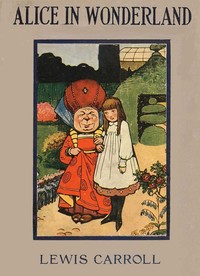
Lewis Carroll told the story of Alice's underground adventure to Alice Liddell and her sisters on a boat trip on 4 July 1862. Alice Liddell asked him to write it down. He did, and had the manuscript illustrated and published as Alice's Adventures in Wonderland in 1865.
It is 27,000 words. You can read it in an afternoon. It is one of the strangest and most influential books in the English language.
Open Alice's Adventures in Wonderland in warpread →
What Alice's Adventures in Wonderland Is Actually About
The surface plot is simple: Alice falls down a rabbit hole, encounters a series of bizarre characters, and wakes up. The Mad Hatter, the Queen of Hearts, the Cheshire Cat, the Mock Turtle, the Caterpillar — each is a version of adult authority seen through a child's eye.
What Carroll is doing is more specific. Wonderland operates on dream logic: causes don't reliably produce effects, size is unstable (Alice grows and shrinks repeatedly), authority figures issue commands that contradict each other, and the rules of conversation and games are enforced arbitrarily. Adults reading Alice recognise this as an accurate description of how social convention works when examined honestly — the rules are arbitrary, enforced by those in power, and contradiction is not acknowledged.
Carroll was a professional logician (his real name was Charles Dodgson, lecturer in mathematics at Oxford). The humour throughout is often formally logical: puns that turn on ambiguity, syllogisms that lead to absurd conclusions, questions that cannot be answered because they rest on false premises. This is funnier if you notice it.
How Long Is Alice in Wonderland?
| Reading speed | Time to finish |
|---|---|
| 200 WPM | ~2.3 hours |
| 250 WPM (average) | ~1.8 hours |
| 350 WPM (practised) | ~1.3 hours |
| 500 WPM (RSVP) | ~54 minutes |
Carroll designed the pacing for reading aloud to children, which means the episodes are short and the momentum is forward. RSVP mode works particularly well for this.
Reading Tips
The poems are not decoration — Carroll parodies well-known Victorian poems throughout (Alice contains parodies of Isaac Watts, Robert Southey, and others). The jokes work best if you know the originals, but even without that knowledge they have a formal absurdity that rewards attention.
Read it fast, then re-read slowly — a first read at RSVP speed gives you the dream-logic forward momentum Carroll intended. A second, slower read reveals the formal structures underneath.
The chapter endings are good stopping points — each chapter is a distinct episode. Twelve chapters total.
Where to Read Alice in Wonderland Free
- warpread library — instant reading, RSVP mode, no account
- Project Gutenberg — original text with Tenniel illustrations
- Standard Ebooks — best-formatted free EPUB
After Alice
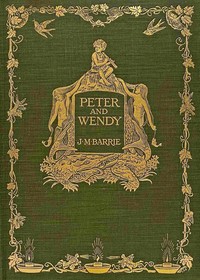
The sequel, Through the Looking-Glass (1871), extends the world with a chess-game structure and slightly darker tone. For more Victorian fantasy: Peter Pan by J.M. Barrie is the other canonical children's fantasy of the era.
For the complete list of free classics, see the 50 best free classic novels to read online.
Continue Reading
If you enjoyed this guide, here are the best next steps:
Read Alice's Adventures in Wonderland free in warpread.app →
For tips on building reading speed with books like this, see our speed reading guide — covering what the research supports, RSVP practice, and how to track your progress.
Everything Lewis Carroll wrote that has fallen into the public domain is in the library, along with the fantasy titles readers usually pair it with.