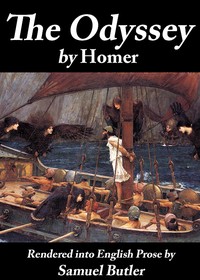
The Odyssey is approximately three thousand years old. It is the second-oldest work in the Western literary tradition (after The Iliad) and the direct ancestor of every adventure narrative that followed: every quest story, every homecoming narrative, every hero who must pass tests before returning to claim what is rightfully theirs.
It is also free to read, right now, in your browser.
Open The Odyssey in warpread →
What The Odyssey Is About
The Trojan War is over. Odysseus — the cleverest of the Greek commanders, the one whose wooden horse scheme ended the ten-year siege — is trying to get home to Ithaca. He has a ship, a crew, and the god Poseidon against him.
Ten more years pass. The crew dies. The ship is destroyed. Odysseus is held for seven years on Calypso's island. He passes through the land of the dead, escapes the Cyclops by blinding him, spends a year with the goddess Circe, navigates between Scylla and Charybdis.
Meanwhile, in Ithaca, his wife Penelope is beset by suitors who believe Odysseus is dead and compete to marry her and claim his kingdom. His son Telemachus has grown up without his father. When Odysseus finally arrives home — alone, disguised as a beggar — the endgame begins.
The last five books of the epic are among the most satisfying in any literature: the recognition scenes, the bow competition, the slaughter, the reunions.
How Long Is The Odyssey?
| Reading speed | Time to finish |
|---|---|
| 200 WPM (slow) | ~10 hours |
| 250 WPM (average) | ~8 hours |
| 350 WPM (practised) | ~5.7 hours |
| 500 WPM (RSVP) | ~4 hours |
In prose translation, The Odyssey reads at roughly the same pace as a Victorian novel.
How to Read The Odyssey Faster
The episodic structure is your friend — unlike a conventional novel with a single sustained arc, The Odyssey is built from separate episodes. Each encounter (the Cyclops, Circe, the Sirens, the Underworld) is self-contained. This makes it easy to read in chunks and to track your progress.
Strategies for speed:
-
Book I–IV (the Telemachy, focussing on Odysseus's son) — these move slowly and are often cut from adaptations. Read at normal pace; they establish the home situation you'll need for the ending.
-
Books V–XII (Odysseus's journey) — the most famous section. Episodes are fast and varied. Use warpread's RSVP mode at 300–350 WPM.
-
Books XIII–XXIV (return and revenge) — the most plotted section. Read carefully. The recognition scenes (particularly of Argos the dog and of Eurycleia) are among the most emotionally affecting passages in ancient literature.
-
The epithets — Homer repeats epithets constantly ("rosy-fingered Dawn," "grey-eyed Athena," "much-enduring Odysseus"). These were mnemonic devices in oral performance. On the page, they can slow readers down. Train yourself to read through them rather than pause at each one.
How to speed read is the practical companion to a book of this size.
The Odyssey and Its Descendants
Every adventure narrative in Western literature is descended from The Odyssey in some way. Recognising this enriches the reading:
- Dante's Inferno is directly influenced by Odysseus's visit to the Underworld (Book XI)
- Joyce's Ulysses maps each chapter to an episode of The Odyssey
- The Coen Brothers' O Brother Where Art Thou? is a direct adaptation
Reading The Odyssey gives you a richer experience of everything that came after it.
Where to Read The Odyssey Free
- warpread library — instant browser reading, RSVP mode, no account needed
- Project Gutenberg — Butler prose translation, EPUB and text
- Standard Ebooks — free formatted EPUB
After The Odyssey
The companion epic is The Iliad — the same tradition, a different war and a different kind of hero. Both are in the warpread library.
For more Greek and Roman classics, Meditations by Marcus Aurelius and The Enchiridion by Epictetus offer philosophy in the same ancient tradition.
For the complete list of free classics to read, see the 50 best free classic novels online.
Continue Reading
If you enjoyed this guide, here are the best next steps:
Read The Odyssey free in warpread.app →
For tips on building reading speed with books like this, see our speed reading guide — covering what the research supports, RSVP practice, and how to track your progress.
The companion volumes and the wider epic poetry shelf are in the library, free to read without signing up for anything.