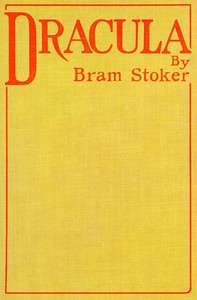
Dracula is 127 years old, has never been out of print, has been adapted for film over 200 times, and gave its title character to the entire genre of vampire fiction. It is also, remarkably, entirely free to read — published in 1897, it entered the public domain generations ago.
What Dracula Is About
The novel begins with solicitor Jonathan Harker travelling to Transylvania to complete a real estate transaction with an aristocratic client. The client is Count Dracula. The castle, the count, and the journey home from both do not go well.
The rest of the novel takes place in England, where the Count has arrived in a crewless ship and begins to prey on the inhabitants of Whitby and then London. The central group of characters — Mina Murray (later Harker), her friend Lucy Westenra, the vampire hunter Abraham Van Helsing, Dr. Jack Seward, and Arthur Holmwood — gradually piece together what is happening and organise a response.
What distinguishes Dracula from its many imitations is the epistolary form: the entire story is told through diary entries, letters, newspaper clippings, and phonograph recordings. This gives the novel an unusual immediacy — you are always inside someone's head, catching events as they happen rather than in retrospect. The Count himself never narrates, which means his presence is always filtered through other people's fear and incomprehension.
How Long Is Dracula?
Dracula runs to approximately 161,000 words — longer than many readers expect.
| Reading speed | Time to finish |
|---|---|
| 200 WPM (slow) | ~13.4 hours |
| 250 WPM (average) | ~10.7 hours |
| 350 WPM (practised) | ~7.7 hours |
| 500 WPM (RSVP) | ~5.4 hours |
The epistolary format makes Dracula feel shorter than these numbers suggest. Diary entries and letters tend to be short and momentum-building — you arrive at the end of each entry having covered ground quickly.
How to Read Dracula Faster
The format of Dracula is its biggest reading-speed advantage. Unlike a traditional third-person narrative that must describe scenes fully, diary entries often compress events — "I will not record everything that happened" — and letters move at the speed of the writer's urgency.
Tips for reading Dracula faster:
-
Use RSVP at moderate speed (300–400 WPM) — warpread.app is particularly good for epistolary fiction because the short entries work well in single-word display mode. Each entry ends naturally and you can take a breath.
-
Track who is narrating — the novel switches between narrators frequently. Mina's diary is careful and organised; Seward's is more clinical (he records to a phonograph, which Stoker renders as a stream of observation). Recognising the voice quickly speeds up comprehension.
-
The Castle section (Chapters 1–4) rewards slow reading — it is the most carefully written and most unsettling part of the novel. After Jonathan escapes, the novel's pace accelerates significantly.
-
Van Helsing's speeches can be skimmed — his long expository speeches explaining vampire lore are important for the plot but can be read at higher speed because the information is not compressed.
See the guide to reading faster for the full RSVP technique.
Why Dracula Still Works
What makes Dracula worth reading in 2026 rather than just watching one of its adaptations?
First, none of the film or TV versions capture the epistolary perspective — the sense of multiple imperfect witnesses piecing together something they can barely believe. This creates a specific kind of dread that cinema cannot replicate.
Second, the novel's sexual subtext — which every serious reading acknowledges — is more sophisticated than its reputation as a Gothic potboiler suggests. The threat Dracula represents to Lucy and Mina is precisely calibrated to the anxieties of late-Victorian masculinity and femininity. The novel is not subtle about this; it is deliberate.
Third, the Count's menace is oddly more effective in prose than on screen, precisely because he is rarely present. The horror is almost entirely anticipatory.
Where to Read Dracula Free
- warpread library — reads instantly in browser, no account, adjustable speed and themes
- Project Gutenberg — original 1897 text in EPUB, Kindle, HTML
- Standard Ebooks — professionally formatted EPUB
Gothic Fiction Worth Reading After Dracula
If Dracula sends you deeper into Gothic literature:
- Frankenstein — Mary Shelley's 1818 novel, the other pillar of monster fiction
- The Turn of the Screw — Henry James's ambiguous ghost story from 1898
- The Picture of Dorian Gray — Wilde's 1890 novel about a man whose portrait carries his moral decay
- The Strange Case of Dr Jekyll and Mr Hyde — Stevenson's 1886 novella, very short, very good
For a full list of recommended free classics, see the 50 best free classic novels to read online.
Continue Reading
If you enjoyed this guide, here are the best next steps:
Read Dracula free in warpread.app →
For tips on building reading speed with books like this, see our speed reading guide — covering what the research supports, RSVP practice, and how to track your progress.
The library carries Bram Stoker and the classics most commonly read beside Dracula, all openable in a tab.