
H.G. Wells published The War of the Worlds in 1898, the same decade as The Time Machine and The Island of Doctor Moreau. All three are scientific romances — adventure stories that use speculative science as a delivery mechanism for social criticism.
The social criticism in The War of the Worlds is the most direct of the three. The Martians are the British Empire. Surrey is India.
Open The War of the Worlds in warpread →
What The War of the Worlds Is About
The narrator is a philosopher living in Woking, Surrey. One evening, cylinders begin falling from the sky near his home. Martians emerge — tall, tentacled, physically helpless out of their machines, but possessed of technology that makes every human weapon useless.
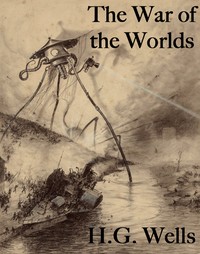
The first half of the novel (Book 1) follows the Martian advance across Surrey and toward London — the heat ray, the black smoke, the unstoppable tripods, the collapse of British military power and social order. The narrator escapes repeatedly through luck more than skill.
The second half (Book 2) covers the occupation: London emptied, the narrator hiding with an artilleryman who has grand plans and a curate who has broken under the pressure. When the narrator finally reaches London, he finds the Martians dead — killed by bacteria, indifferent to the entire drama.
The ending is not triumphant. Humanity did nothing. We were saved by accident.
How Long Is The War of the Worlds?
| Reading speed | Time to finish |
|---|---|
| 200 WPM | ~5 hours |
| 250 WPM (average) | ~4 hours |
| 350 WPM (practised) | ~2.9 hours |
| 500 WPM (RSVP) | ~2 hours |
How to Read It Faster
The two-book structure — Book 1 is pure forward drive: invasion, panic, destruction. warpread's RSVP mode at 400–450 WPM matches the narrative urgency perfectly. Book 2 is more reflective; drop to 300 WPM.
The journalistic voice — Wells writes through a narrator who is observing and recording events with scientific detachment even when terrified. This voice is precise and fast-moving. Don't slow down for description; it accumulates detail efficiently.
The opening and the ending — the first two pages establish the colonial inversion that gives the novel its political force. The last five pages (the return to London) are the most affecting. Both reward slower reading.
The artilleryman section — some readers find the artilleryman's utopian plans tedious. They are actually central to the novel's argument about how humans respond to catastrophe. Read them at 280 WPM.
For the full speed reading technique, see how to read faster.
Where to Read The War of the Worlds Free
- warpread library — instant reading, RSVP mode, no account needed
- Project Gutenberg — complete text, EPUB and download
- Standard Ebooks — best-formatted free EPUB
More H.G. Wells in the Library
- The Time Machine — the Eloi and Morlocks; class analysis extended to evolutionary endpoints
- Jekyll and Hyde — Stevenson's parallel scientific horror from the same decade
For the full list of free classics, see the 50 best free classic novels to read online.
Continue Reading
If you enjoyed this guide, here are the best next steps:
Read The War of the Worlds free in warpread.app →
For tips on building reading speed with books like this, see How to Speed Read: 7 Proven Techniques — covering RSVP practice, subvocalisation reduction, and how to track your progress.
If you're looking for more books at a similar level, warpread's free library has 70+ public domain classics ready to read in your browser, organised by author, genre, and difficulty.
Topics
Frequently asked questions
Is The War of the Worlds free to read online?
Yes. The War of the Worlds was published in 1898 and is in the public domain. You can read it free at warpread.app's library (Project Gutenberg ID 36), Standard Ebooks, and many other sites — no account, no download, no payment.
How long does it take to read The War of the Worlds?
The War of the Worlds is approximately 60,000 words. At 250 WPM it takes about 4 hours. At 350 WPM around 2.9 hours. At 500 WPM with RSVP reading, about 2 hours. A weekend afternoon is enough.
What is The War of the Worlds about?
Martians land in Surrey, England, in the late 1890s. Their technology — heat rays, tripods, black smoke — is vastly superior to anything humanity can muster. The British Army is destroyed. London is evacuated. The narrator, a philosopher and writer, survives by hiding and wandering across the devastated landscape. The novel ends without a human victory: the Martians die from bacterial infection, having no immunity to Earth's microorganisms.
Is The War of the Worlds a critique of colonialism?
Yes, explicitly. Wells states this in the opening pages: 'And before we judge them too harshly we must remember what ruthless and utter destruction our own species has wrought, not only upon animals, such as the vanished bison and the dodo, but upon its inferior races.' He is inverting the colonial encounter — making the British the helpless natives and the Martians the technologically superior invaders who feel entitled to resources and territory. The parallel with British imperialism is deliberate and central.
What kills the Martians in The War of the Worlds?
Bacteria. The Martians have no immune system capable of handling Earth's microbial environment. After defeating every human weapon, they are killed by the smallest things: 'the humblest things that God in his wisdom has put upon this earth.' Wells uses this ending to deflate human pride — we did not defeat the Martians; we were simply lucky to have coevolved with bacteria the Martians had never encountered.
Is The War of the Worlds suitable for RSVP reading?
The War of the Worlds is excellent for RSVP speed reading. Wells writes action-driven, journalistic prose — clear sentences, fast pacing, vivid scene-setting. The two-book structure (Book 1: The Coming of the Martians; Book 2: The Earth Under the Martians) provides natural break points. Recommended speed: 350–450 WPM in warpread's RSVP mode for the action sequences, 280 WPM for the reflective passages.
Ready to apply these techniques?
Take the free reading speed test to benchmark your WPM and get personalised technique suggestions.