"It was the best of times, it was the worst of times, it was the age of wisdom, it was the age of foolishness."
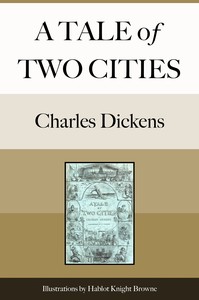
That opening has been quoted so often it has lost some of its force. Read in context, it does something specific: it prepares you for a novel in which history moves at extremes and individuals are caught between them. A Tale of Two Cities is about what happens to private lives during public catastrophe.
Open A Tale of Two Cities in warpread →
What A Tale of Two Cities Is About
The novel moves between London and Paris in the years leading up to and through the French Revolution. Dr. Manette, a French physician, has been released from the Bastille after eighteen years of unjust imprisonment; his daughter Lucie is reunited with him and they settle in London.
Into their lives come Charles Darnay — a young Frenchman of aristocratic origin who has renounced his family's cruelty — and Sydney Carton, a brilliant but self-destructive English lawyer. Both love Lucie. Darnay wins her.
When the Revolution erupts, Darnay is arrested and condemned. The novel's final movement — Sydney Carton's response to this — is among the most emotionally powerful endings in Victorian fiction.
The two cities are London (relative stability, private life, sanctuary) and Paris (revolutionary violence, public history, the guillotine). Dickens is interested in how individuals navigate historical forces that are indifferent to them.
How Long Is A Tale of Two Cities?
| Reading speed | Time to finish |
|---|---|
| 200 WPM (slow) | ~11.3 hours |
| 250 WPM (average) | ~9 hours |
| 350 WPM (practised) | ~6.4 hours |
| 500 WPM (RSVP) | ~4.5 hours |
Over a weekend at a practised pace. One of the most readable novels Dickens wrote — the serial origins show in the relentless forward pace.
Reading Strategy
Book One (Recalled to Life) — short and atmospheric. Establish the characters and the mood. Don't skim the coach sequence; it sets the tone precisely.
Book Two (The Golden Thread) — the longest section, establishing the London life and the relationships. This is where readers sometimes find the pace slower. Push through — everything here pays off in Book Three.
Book Three (The Track of a Storm) — the Revolution arrives. Read this at speed; Dickens is at his most cinematically urgent. The final chapters deserve your full attention.
Sydney Carton's arc — watch him carefully from his first appearance. The clues to the ending are present from Chapter 4.
Use warpread's RSVP mode at 300–400 WPM — this is a pace novel; the urgency is built into the sentence rhythm. RSVP reading matches what Dickens intended.
The full technique — chunking, pacing, cutting subvocalisation — is in how to speed read.
Where to Read A Tale of Two Cities Free
- warpread library — instant browser reading, RSVP mode, no account needed
- Project Gutenberg — complete text, EPUB and download
- Standard Ebooks — best-formatted free EPUB
After A Tale of Two Cities
For more Dickens: Great Expectations — arguably his finest novel, and a very different kind of story. For more historical fiction in the Victorian tradition: Les Misérables by Victor Hugo covers the same revolutionary era from the French side.
For the full list of free classics, see the 50 best free classic novels to read online.
Continue Reading
If you enjoyed this guide, here are the best next steps:
Read A Tale of Two Cities free in warpread.app →
For tips on building reading speed with books like this, see our speed reading guide — covering what the research supports, RSVP practice, and how to track your progress.
The library carries Charles Dickens and the classics most commonly read beside A Tale of Two Cities, all openable in a tab.